Step 01TQT does thisFirst · With Calibration · Before Coupons

The metal is what the spec says.

Material testing

Tensile · Charpy · PMI · Hardness

Before anyone welds, prove the metal is what the paperwork says. We test strength, toughness, alloy and hardness in our Brook Park lab. You don't weld until the metal is the metal.

Quoted per jobby test and number of samples
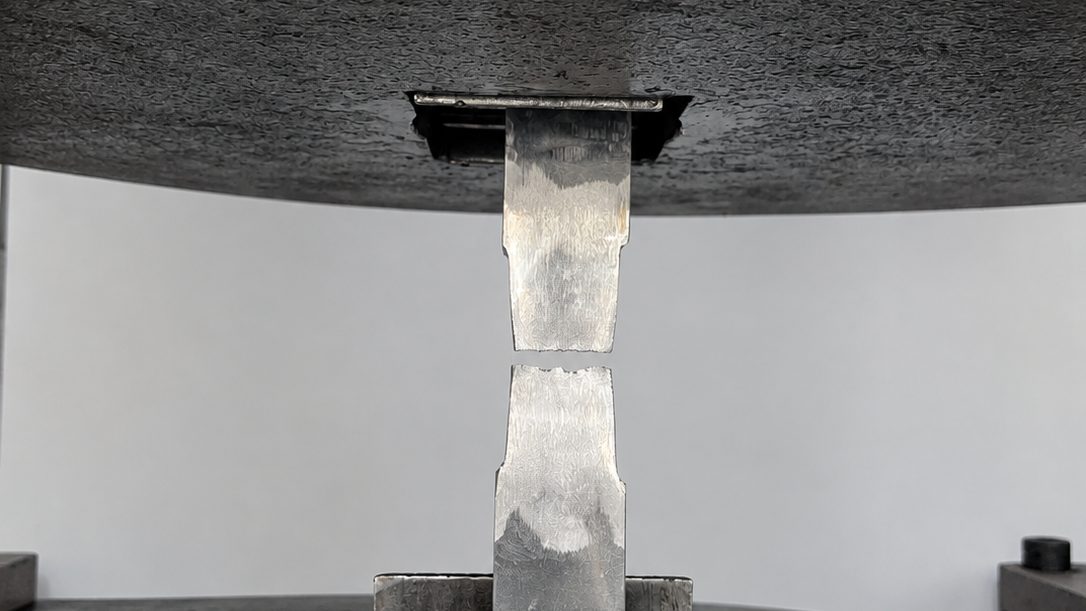
TENSILE TEST Weld tensile specimen gripped in a SATEC tensile testing machine
Pulled until it breaks. A test bar in our SATEC machine. The load at the break shows how strong the metal really is.
In the kitchen

The groceries. Check the label matches what's in the bag before anything gets cooked.

Why it comes first

Paperwork says one thing. The test proves it.

Every PQR, WPS and welder test is built on the metal being what its mill test report says. If the metal is wrong, everything after it is wrong too.

MILL TEST REPORT SAYSSA-516 Gr 70
Tensile 70–90 ksi
Yield 38 ksi min.
Charpy at −20°F
TQT CONFIRMS✓ Tensile within range
✓ Yield above minimum
✓ Charpy energy meets spec
✓ PMI matches the grade

Example values for illustration. Your spec sets the real numbers.

The tests

Four ways to prove the metal

Strength, toughness, alloy and hardness. Most jobs need one or two.

TensileHow strong it is

A machined bar of the metal is pulled until it breaks, while the machine records the load.

  1. Machine a test bar to a standard shape.
  2. Grip it in the tensile machine and pull.
  3. Record the load until it breaks.
You get
Yield strength, ultimate tensile strength, elongation and reduction of area
Use it for
Proving the metal meets the strength its spec requires
Charpy impactHow tough it is

A small notched bar is cooled or heated to a set temperature, then broken with one swing of a heavy pendulum.

  1. Machine a notched bar.
  2. Bring it to the test temperature.
  3. Break it with the pendulum and read the energy.
You get
Energy absorbed (ft·lb), plus % shear and lateral expansion when required
Use it for
Cold-service parts, and codes or customers that require toughness
PMIWhat alloy it is

Positive Material Identification: a handheld analyzer reads the metal’s chemistry right on the part. Nothing is cut.

  1. Clean a small spot on the part.
  2. Take a reading with the analyzer.
  3. Compare the chemistry to the grade on the paperwork.
You get
The alloy and its main elements, for example 316L vs. 304 stainless
Use it for
Mixed-up stock, missing paperwork, and alloy-critical piping
HardnessHow hard it is

A shaped tip is pressed into the surface with a set load. The size or depth of the dent gives the hardness number.

  1. Prepare a smooth spot on the metal or weld.
  2. Press the indenter in with a set load.
  3. Measure the dent and report the number.
You get
A hardness number on a standard scale, in base metal, weld or heat-affected zone
Use it for
Checking heat treatment, and parts with hardness limits like sour service

Which one do I need?

Start with what you need to know

Is it the right alloy?

PMI

Mixed-up stock, missing paperwork, or an alloy that has to be right.

About PMI →

Is it strong enough?

Tensile

Proof the metal meets the strength in its spec.

About tensile →

Will it crack in the cold?

Charpy

Toughness at the temperature the part will see.

About Charpy →

Was it heat treated right?

Hardness

Hardness limits, heat treatment checks and sour service.

About hardness →

How it works

From sample to report

  1. Send the metal

    Drop it off, or use the after-hours drop box.

    YOU
  2. We prep specimens

    Prepared as the test method and code require.

    TQT
  3. We test

    Tensile, Charpy, PMI or hardness.

    TQT
  4. You get the report

    Results against your spec, ready for your records.

    TQT

Price

What material testing costs

MATERIAL TESTING Quoted per job

Set by the tests and the number of samples.

Request a quote See all rates →
Tests
Tensile, Charpy impact, PMI and hardness
Turnaround
Standard turnaround is 5–7 days.
Terms
Net 30. 4% fee on card payments.

Questions

Before you send samples

Does PMI damage the part?

No. PMI reads the chemistry from the surface, so the part can go back into service.

Do you machine the test specimens?

It depends on the test method and the code being tested to. Call us with both and we'll tell you what to send.

Which standards do you test to?

ASTM E8 for tensile, ASTM E23 for Charpy, and ASTM E18 or E10 for hardness.

Do I need material testing before a PQR?

Your mill test report usually covers it. Test when the paperwork is missing, the stock is mixed up, or your code or customer requires it.

Need the metal proven?

Tell us the material and the spec. We'll tell you which tests you need.